
僵尸世界大战
四川马边县极端强降雨引发山洪,有车辆被冲到墙体上悬挂_我的网站

一 |
8月22日凌晨,四川乐山市马边彝族自治县遭遇强降雨。

二 | 险情发生后,当地应急、消防、公安等救援力量连夜投入抢险,紧急转移受困群众,同步开展隐患排查、道路清淤等工作。

三 |
潇湘晨报 ·晨视频 记者联系当地居民小强获悉,强降雨引发的山洪正逐步消退,当地降雨已经停止。据其提供的现场视频显示,洪水退去后,街道遍布泥沙与各类堆积物,路面完全被淤泥覆盖;沿街不少车辆、商铺、房屋被洪水浸泡受损,还有车辆受洪水冲击力裹挟,被冲到墙体上悬挂。
。 
四 | 小强介绍当地群众都在抢通道路,“马边人首先就是自救”。

五 |
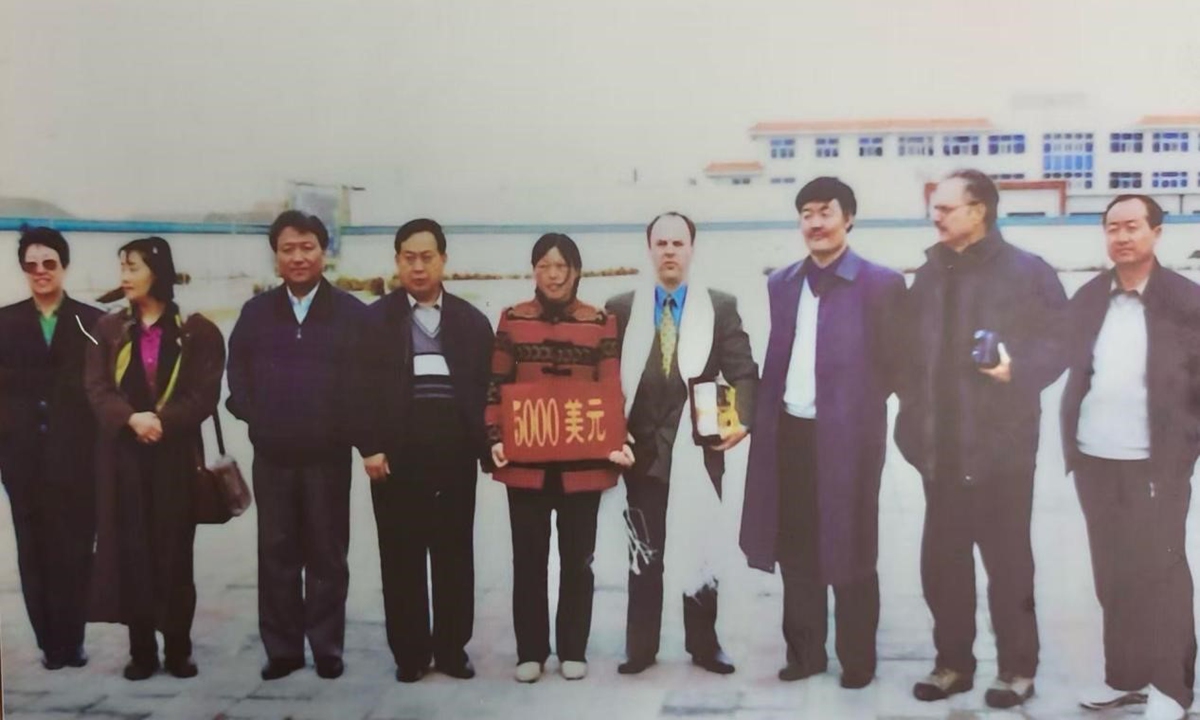
At 2:48 am on early Sunday morning, after a flight of more than 10 hours, Ronald Sakolsky arrived at Beijing Capital International Airport. As he stepped into the arrivals hall, he greeted the waiting reporters with earnest Putonghua "Wo hui lai le," meaning "I'm back."
The thrill of his homecoming had washed over him most vividly during the final moments of his flight. "When I saw the lights in Beijing as we were landing is when I realized that I am back in my second home."
Sakolsky, an American retired teacher from Pennsylvania, is visiting China from Sunday to September 1 for a journey that will take him to Beijing, North China's Inner Mongolia Autonomous Region and Central China's Henan Province. It is a reunion nearly three decades in the making.
That reunion began with a single act of generosity. In 1999, when Sakolsky arrived in China as a participant in a bilateral teacher exchange program, he was moved by Yin Yuzhen and her husband's tireless efforts to curb desertification in the Mu Us Desert in Inner Mongolia. He raised $5,000 to fund their local tree-planting initiative. The young saplings bought with the donation have since matured into more than 50,000 full-grown trees, transforming the once desolate, sandy wasteland into a thriving green landscape.
After decades of lost contact, Yin, a national model worker renowned for her desert restoration achievements, launched an online search for her American benefactor in May, hoping to reconnect with the man who helped launch her lifelong desert reclamation mission.
What followed was a remarkable wave of online support: within less than 48 hours, a nationwide search had tracked Sakolsky down. That swift effort led to their long-awaited virtual reunion, a video call that brought them face to face for the first time in 27 years.
Asked what he is most looking forward to about this journey, Sakolsky told the Global Times that "I want to see Ms Yin, see the forests, see the students I have not seen for almost 30 years, my colleagues. I want to see the Chinese people."
The trip itself felt like a dream he never thought would come true, he added.
Now, the dream is about to come true. Later on Sunday, Sakolsky will fly to Ordos, Inner Mongolia, the site of the transformative environmental project that bound his fate with Yin's all those years ago.
During his China visit, Sakolsky will join Yin in a new tree-planting activity. He will also hold exchanges and discussions with teachers and students from the Luoyang No.2 Foreign Language School where he once taught, and participate in official China-US teacher exchange events, according to the Xinhua News Agency.
As he prepares to see the transformed landscape with his own eyes, Sakolsky shared with the Global Times about how much China itself has changed over the past two decades. From photographs, he said, he had already seen the barren desert he remembered turn into lush green forests; he had also heard that Luoyang has become far more vibrant and beautiful.
"Hopefully the message gets out to the world that Chinese and Americans can work together and make a peaceful world," he said.
。
Current article:http://www.kelozhaichongbaoshuo.pics/tdx/1nzqp.doc
Published on:03:26:36