
魔女的条件
Indigenous leader of Guatemala protests: Defending democracy after election_我的网站

A |
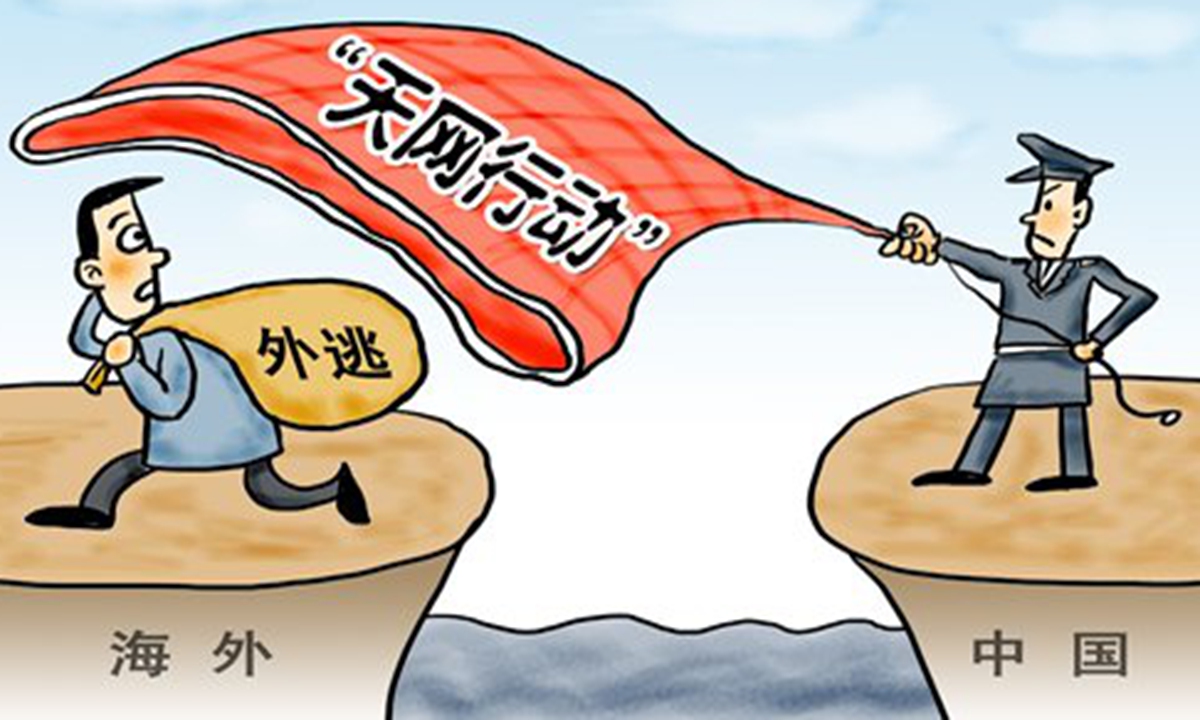
Chinese lawmakers began reviewing a draft law on combating cross-border corruption on Tuesday, a legislation which experts believe would help close legal gaps in investigating overseas corruption, pursuing fugitives and recovering illicit assets, while strengthening international cooperation and corporate compliance.
The draft was submitted for its first reading to the ongoing session of the Standing Committee of the National People's Congress, the country's top legislature, per Xinhua News Agency.
Huo Zhengxin, a professor at the China University of Political Science and Law, told the Global Times that the draft law represents a dedicated piece of legislation within China's anti-corruption legal framework and a major step forward in the country's law-based governance of foreign-related affairs. It will fill a legislative gap in combating cross-border corruption, Huo said.
As Chinese companies expand business overseas, cross-border corruption cases face challenges in obtaining evidence abroad, pursuing fugitives and recovering illicit assets. Existing anti-corruption laws have faced limitations in addressing such cases involving foreign affairs, making such dedicated legislation necessary, Huo said.
Structured into six chapters and 47 articles, the draft sets out the principles, scope and key provisions underpinning China's efforts to combat cross-border corruption. It also defines relevant operational mechanisms and institutional responsibilities, and seeks to strengthen case handling and international cooperation.
The draft further clarifies enterprises' obligations regarding integrity and compliance, and specifies legal liabilities for violations.
As one of the experts involved in drafting the legislation, Huo said a key innovation of the draft is to strengthen international cooperation and corporate integrity and compliance obligations. As evidence, suspects and illicit assets in cross-border corruption cases are often located overseas, the draft provides mechanisms including extradition, mutual legal assistance and repatriation, while aligning with relevant rules under the UN Convention against Corruption (UNCAC), said the expert.
The draft also makes clear that Chinese companies operating overseas, including both state-owned and private enterprises, have legal obligations to uphold integrity and compliance with domestic laws, Huo said.
The legislation would also codify practices accumulated through China's past campaigns against cross-border corruption, such as Sky Net and Fox Hunt operations, turning them into a more systematic legal framework and strengthening the law's deterrent effect, according to Huo.
The draft law is a practical step to regulate the development of cross-border businesses and help build a world-class business environment aligned with market principles, the rule of law and international standards, Xinhua noted.
It is also expected to expand the legal tools available to combat cross-border corruption and help address challenges in detecting corruption, collecting evidence, recovering illicit assets and securing convictions, according to the report.
In January, CCTV News reported on the case of a former senior executive of China National Offshore Oil Corporation, who was accused of accepting large amounts of bribes that were concealed overseas, with a businessman allegedly acting as a "front" to collect the illicit payments.
The draft's explicit corporate integrity and compliance requirements would make it harder for individuals to disguise bribery and other corrupt practices through overseas projects in an attempt to circumvent domestic oversight, while further clarifying the extraterritorial reach of China's anti-corruption laws, Huo said.
The draft also contains provisions to counter the use of foreign countries' domestic anti-corruption laws to exercise "long-arm jurisdiction" over Chinese companies, which Huo described as another important innovation in China's foreign-related legal framework.
China has been deepening its efforts in international anti-corruption cooperation, with 963 corrupt fugitives repatriated to the country in 2025, according to a work report from the country's top anti-graft body, Xinhua reported.
。 GUATEMALA CITY -- One of the leaders of the nationwide protests against efforts to undermine Guatemala’s elections that have paralyzed much of the country’s commerce for nearly two weeks is a young one-time law student who now heads up one of the country’s most important Indigenous organizations.While Guatemala President Alejandro Giammattei tries to draw President-elect Bernardo Arévalo into a dialogue aimed at ending the protests, Luis Pacheco says that it isn’t Arévalo’s call to make and that Giammattei could end them by meeting their demands.Guatemala has been roiled throughout much of this year’s election cycle and even a resounding victory by Arévalo in August did not calm it. The academic and former diplomat ran on a platform of battling corruption that observers say has unnerved Guatemala’s entrenched power structure.This month's protests have been the largest public display rejecting the administration's questioning of the election. Protesters have peacefully blocked key roadways at more than 100 points across the country. Giammattei this week made clear his intention to clear them by force if necessary.The protesters have made Attorney General Consuelo Porras the target of their ire. Since Arévalo was the surprise second-place finisher in an initial round of voting in June, her office has pursued investigations related to how Arévalo's Seed Movement party collected signatures required to register years earlier and multiple investigations related to the election itself.For Pacheco and the 48 Indigenous communities he represents northwest of Guatemala’s capital, the solution is simple: Porras, one of her prosecutors and a judge who suspended Arévalo’s party have to go.“We’re not asking for something that can’t be done, we are not asking for constitutional reforms, which would be more complicated,” Pacheco said late Tuesday. He stood a block from one of the roadblocks in Guatemala City, holding the wooden staff that signals his position and his customary wide-brimmed hat and shoulder bag. His manner of speaking was measured and calm.Pacheco said the galvanizing moment for the K’iche’ people he represents was a raid on electoral offices broadcast live in which federal agents opened and took away — despite resistance from some electoral officials — boxes containing precinct vote tally sheets. “The people already voted and you have to respect the decision taken,” he said.“We know that they don’t want to lose the power they have,” Pacheco said.The protests have been largely peaceful. Demonstrators allow ambulances to pass, as well as trucks carrying basic food stuffs and gasoline. “We don’t want to kill ourselves as people,” he said. “What we want to show is that we want to defend and take back democracy.”Pacheco cited Atanasio Tzul, an Indigenous leader who led an uprising in 1820 demanding rights, as an influence.Álvaro Pop, former chairman of the United Nations Permanent Forum on Indigenous Issues, said that what is happening now in Guatemala is the end of a cycle in which the government has tried to eliminate or transform the protest.In 2015, thousands of Guatemalans took to the streets, eventually forcing then-President Otto Pérez Molina to resign over corruption allegations. In 2020, Giammattei violently put down protests against his administration.Guatemalans are much more conscious than in previous years of the pervasive corruption in their government, Pop said, in large part because of the years of work by a U.N.-backed anticorruption mission.“The Indigenous peoples (call for the protests) because they are the ones with the moral standing to do so and that is why there is a response and support, but there is the risk that the protests are undermined by racism,” Pop said.Pacheco, mayor of the town of Juchanep, will only hold the rotating post of president of the 48 cantons for a year, but is aware that his role in the protests could lead to persecution.Recently, a far-right activist closely aligned with Porras filed a complaint against Pacheco alleging damage committed by protesters. Often this is a prelude to criminal charges.“We’re not here on behalf of a political party, we’re not defending Arévalo so he can assume the presidency, no one else decided this,” Pacheco said. “Not even if Arévalo told us to stop the protests, we’re not going to do it. The negotiation is between the Indigenous peoples and the government.”。
Current article:http://www.kelozhaichongbaoshuo.pics/list_o7e/ycpbeh.html
Published on:14:30:51
 新技术可以让医生通过声音诊断疾病
 LEGO Batman 新 DLC 预告片将在 IGN 的 gamescom 直播中首发
 苹果折叠屏手机即将面世,概念股出现异动
 福彩体验店入驻宁德东方伟业广场
 理论微课堂·学习贯彻习近平党建思想⑤ | 持续推动学习贯彻习近平党建思想走深走实
 伊朗放出信号:愿与美直接对话